
Exploring Artificial Intelligence & its Impact on the future of Public Relations
- Grace Deboer
- Apr 29, 2024
- 5 min read


As an aspiring public relations professional, I’ve become increasingly aware of this alleged danger of “artificial intelligence” in my field. Through nerve-wracking article titles about the pros and cons of AI, whispers of my peers being put on academic probation for plagiarism using whatever “ChatGPT” was and class discussions about why AI might steal our future jobs, I quickly began to fear it. However, as a senior undergraduate student, and someone just not ready to stop learning, I decided to face my fear of AI head-on. I shadowed the Advanced Media Management graduate program at my school and was convinced to sign up for one of the classes in the curriculum to learn more about emerging technology in the communications field, Artificial Intelligence for Media Professionals.
As my time in this class concludes, I was tasked with a cumulative final assignment, one where I can display what I learned from the course and its impact on me. I decided to create a project based on those initial nerves surrounding AI that I had before I began the class and explore what AI makes us feel as PR professionals.
I set out to create a comparative analysis between human-made and AI-generated PR campaign deliverables. As a senior PR student, I was also in my capstone class, where my team of peers and I had to create a full PR campaign pitch to present to real-life clients. Our client was the US Fire Administration, aiming to increase fire safety and prevention knowledge among 18-24-year-olds in the northeast region. While my team and I spent hours throughout the entire semester crafting our PR deliverable mockups, I created several mockups of the same content using ChatGPT4, in seconds. Once all of the content was created, I put it into a slideshow to present to my peers, friends and family to retrieve feedback on how it made them feel. Additionally, I created a custom AI chatbot using ChatGPT, that was coded to act as an accessible, instant firefighter helper for my client’s patrons. I presented this to my team, clients, professor and entire class during our final report. I surveyed, observed and interviewed all of these people, trying to find as many communication professionals or students as the audience of my project.
So what did I find? When I was able to interview and survey my audience, I asked them three key questions about my slideshow, “Which deliverables do you prefer in my presentation (AI-generated or human-made? Why?” “How do you feel currently about AI in the PR industry?” And, “Does this make you feel nervous or excited about the future of AI in PR?”
As the creative behind many of the mockups that my team and I made by hand and used in my comparative slideshow, I was very satisfied with the graphics and ideas we created and enjoyed the process of making them. We used Google Docs for all of our written work and Canva for our graphics, and these platforms were easy to use and accessible. Creating mockups on ChatGPT was also simple and extremely efficient. It took me a few minutes to create what I was looking for in each mockup, while our capstone team took multiple class hours just brainstorming and outlining plans. I personally still preferred all of the graphics my team created, but found that the lengthier, repetitive PR projects such as making a survey, PESO model and SWOT analysis were well done, and took way less effort and time to orchestrate. My peers seemed to agree with these thoughts.
Before launching my outreach, I thought about how people would react to my slideshow and chatbot. I hypothesized that PR professionals and students wouldn’t want to implement AI into their work and that they might fear it. Also, they would be surprised by how much AI can do for them, but would still prefer some human-made deliverables, and they would be impressed by the chatbot. My results were qualitative, short answer responses to my survey, in a conversation via interview or from my observance during my in-class chatbot demonstration. During class, my client asked the chatbot if she should sleep with her door closed at night, and the firefighter chatbot immediately replied that yes, she should, to keep fire out. My peers seemed impressed, and one asked if he could use the bot with a regular ChatGPT account and I had to regretfully inform him that it wasn’t possible without a ChatGPT4 account just yet. My friends who I demonstrated the chatbot to were equally impressed, eyes widening at how quickly responses were generated. One person said that they “really (liked the) AI chatbot because it’s a really cool tool that could be used very frequently by businesses in the future.”
When surveying and interviewing others, the answers to my first question, “Which deliverables do you prefer in my presentation (AI-generated or human-made? Why?” all preferred the human-made graphics, but some pointed out the inspiration the GPT prompts could give them:
“Human-made because they are clearer, more appealing and the messaging is more compelling.”
“For the most part, I preferred the human-made. For the majority of the results, the human-made deliverables were more colorful, and held more personality. While I know AI can produce great information, it seems to be lacking the human feel that is significant to conducting surveys”.
“I prefer the human-made deliverables because they are more pleasing to the eye and easier to follow and understand. More exciting as well.”
For the second question, “How do you feel currently about AI in the PR industry?” people replied with various feelings, but remained strong in the belief of the need for humans, even when using AI:
“Currently, it doesn’t bother me. I can’t see AI taking over PR because PR requires understanding emotions and persuading audiences, which are human skills that cannot yet be imitated by AI. I think AI is a useful tool for graphic design and coming up with initial ideas.”
“I think it will revolutionize a lot of the busy work in our industry, but it cannot replace the need for a human mind behind PR initiatives, specifically crisis communications.”
“I believe that AI in the PR industry can be troubling. I believe that AI has the potential to strip away the hard work of PR specialists. Additionally, I feel as though the results of PR through AI would not be as authentic, because it is lacking human intuition.”
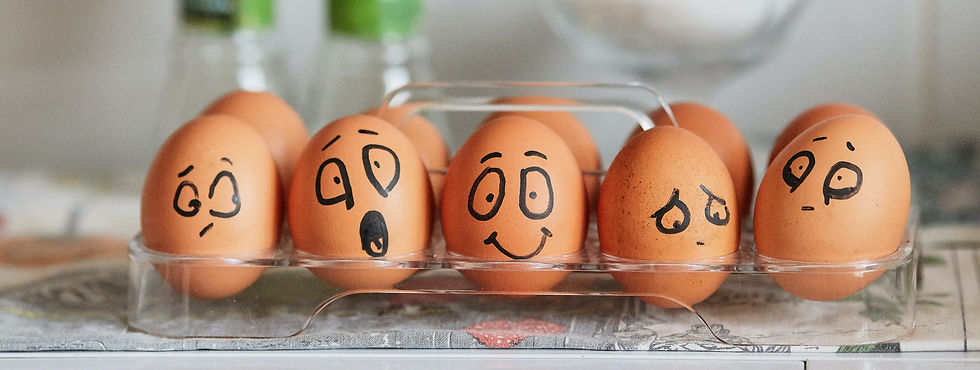
For my final question, “Does this make you feel nervous or excited about the future of AI in PR?” the responses were split.
“I am excited about the future of AI in PR. I’m curious how disruptive it will be in the industry as it continues to develop and increase in intelligence.”
“I feel excited! I prefer the human mockups to the AI, so I'm not worried about AI 'stealing my job' anytime soon, in fact I think that AI will help many PR professionals save time so that we can focus on more pressing issues.”
“I am nervous about the future of AI in PR. As an undergraduate student studying communications, I hope that this only helps our opportunities in the workforce, and not harm them.”
“A bit of both. Mostly nervous because of the implications of AI (replacing human jobs), but excited to see what it could potentially accomplish.”
Generally, my hypotheses were correct. Humans don’t want their jobs to be lost to AI, but many are starting to realize that it is not a true threat. As I worked through this project and learned in my class all semester, AI is an extremely powerful tool, but humans will only become more empowered when we learn how to harness it. AI is something public relations professionals should reap the benefits of, and not shy away from.

Comments